The Photography Kit I Use, And Why It's Enough
The Camera Kit That Lets Me Shoot Like Myself
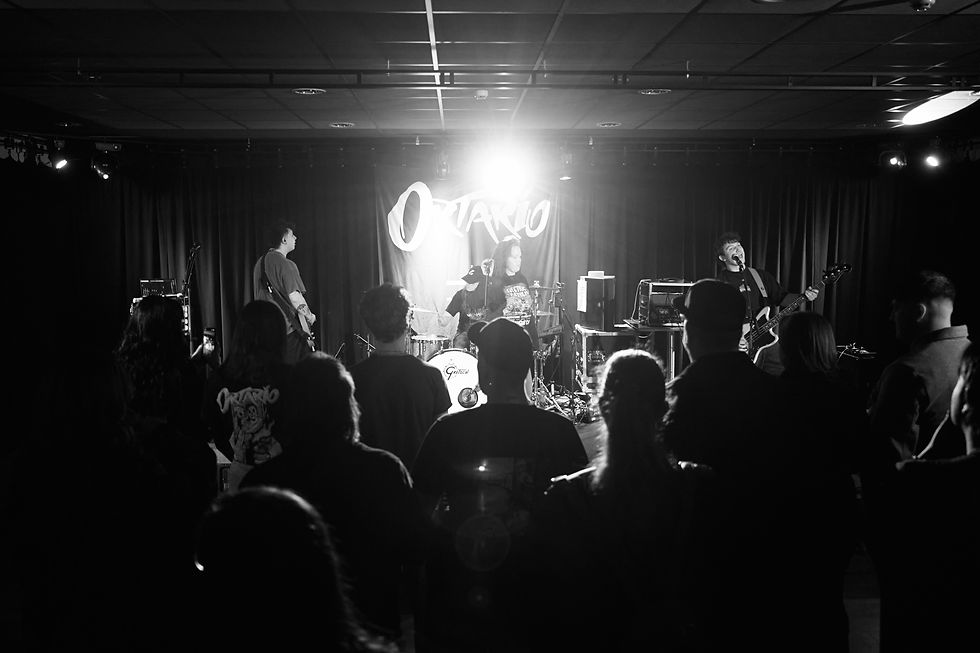
So I want to start this article a little differently. As a music photographer and videographer, I often get asked what camera setup I use (usually the assumption is Canon), and I'm often surprised by their choices. Some are quite standard, in particular some of my lens choices, but others are a little unconventional. Let me explain.
First of all, this is perhaps a controversial opinion, but I use Panasonic Lumix. For the photographers out there, I often get asked, "But why?" Some say, "Well [insert brand here] has better [insert function here]". And for this, my response is simple, unapologetic and honest. I love how my camera feels to hold and use, and, perhaps as an internal rebel, I like that it is a smaller brand. So let's start with my camera, then I'll go on to my lenses. To be frank, this is not a spec sheet; there are plenty of articles about that, but rather a unscientific reflection of my experiences. So let's start. By the way, the lenses are listed by the amount I use them, if you are interested.

Panasonic Lumix S1Rii
This is my newest purchase, and it is my absolute dream camera! But let's start at the prequel. Before using the Lumix system, I tried Sony, Nikon, Olympus, and Fujifilm. I was also an OG user of the Pentax K1 (and still secretly rooting for them to come back swinging!). But with the Sony system in particular, I used the A7Rii and A7iii before switching. These cameras were great specs-wise. They were small (especially compared to the beast that is the K1), autofocus was good, image sizes were great, but I just never felt inspired by it. I found that I started to take it out less and less. With a couple of personal changes and a potential relocation, I decided to sell it when my motivation for photography was quite low. I read up on the Fujifilm system and wanted a camera that wasn't as technically perfect, so I ultimately chose the XS-10. This camera was cool, funky to use and actually inspired me to go out again. It was tactile to use, and I started taking it out on hiking trips once again. And caught one of my favourite photos whilst at the top of Y Garn, North Wales.

During this time, I felt inspired again and began reading up on the new, slightly unconventional L-mount camera, the Lumix S1. With that, I sold everything to pick one up (used, I might add). It was big, heavy, and quite obnoxious, but from the moment I picked it up, I fell in love with it. Sure, the autofocus wasn't as good as other brands'. Sure, the L mount was new, meaning not many lenses were available, and sure, this was a time when there were very real questions about the longevity of camera systems amid the continued rise of smartphones. But, to be honest, I didn't really care. My thought process was, "If there are good lenses, is there really a need to upgrade?" Maybe a wrong thought process, but actually, maybe not.
This journey wasn't instant; it was over many years. I was unsure about going professional for a while. However, in 2025, my first endeavours into music photography and the announcement of the Lumix S1Rii, I knew it was what I wanted, and absolutely no one could tell me otherwise!

From my brief time using it, here's my summary of the upgrade. Yes. The images are stunning, the autofocus is better than I've ever used in a camera, and the stabilisation is great! I must say, though, my poor computer is struggling with the file sizes. But this is a bit of short-sightedness on my part.
If you are considering getting a new camera and are concerned about its low-light performance, specifically for music photography, you will have absolutely no problems. And Lumix, if you have a fancy new camera coming out, you know where to reach out!
Sigma 70-200 F2.8 DG DN OS Sports (why so many letters...?)
This is my workhorse. It is also large, heavy and sharp. Very sharp. When I use this lens, I don't know how, but the tracking is incredible, it always focuses correctly and means I get some great close-ups. This is on my camera because of how versatile it is, and I suggest that any 70-200 2.8 is essential for any music photographer's kit.
One thing I particularly like about it, again, this is a personal choice, but it has a catseye effect with the blurred edges that starts to look like a swirl if you get it just right. That, when combined with the sharp centre, gives it a unique character and truly centres the attention on the band members playing.
The original reason I got this lens was relatively simple. It was sharp, fast, cheaper than the Lumix own brand, and there weren't "that" many other choices. But I also use this when faking macro work. Because it's so sharp, when combined with the megapixel count of the Lumix S1Rii, you can crop quite heavily and still get a very clean image. And this is without the pixel shift mode, which would surely make my computer question its life choices! Anyway, this lens is on my camera about 40% of the time.
Let's be clear: this is my favourite lens I have ever owned, and I enjoy using it every time I take it out of my bag (I wouldn't use it as a discreet street lens...).

Sigma 16-28 F2.8 contemporary
This was quite a straightforward choice for a very specific reason. There is the Art version, 14-28, but the filter thread was huge. This was an easy choice because the 2mm difference is nothing compared to losing the ability to use filters (we'll get onto those later).
This is a bit of a wacky lens, especially when photographing music events. It is compact, but just be aware of the distortion when shooting wide! In other words, this isn't a portrait lens. BUT what it has a special place in my heart is how it captures dramatic moments. With the right light, the musician's stance, and angle, you can capture some spectacular shots! This is about vibes, not pretty pictures. It has to be used intentionally. But when used correctly (which I often don't), it is incredible. It is also quite a fun lens to experiment with. Getting close-up shots of the drummer inside the drums, catching the hero shot or even getting really close (even sometimes uncomfortably so) to catch the sweaty action inside the pit.
This lens is on my camera about 25% of the time.

Sirui 85mm F1.4 Aurora lens
I love this lens for one reason. Flare baby flare!
There are some limitations with this lens that I want to make you aware of. Its focusing distance is not particularly close, and, depending on your preference, it has a very pronounced "bloom" effect. Against backlight and at F1.4, this lens has a very specific look which I adore, it makes the musicians almost look dream-like!
And actually, the autofocus is better than I would expect. Sure, it's not the quickest in the world, but it's also usable and has saved me in particularly dark venues.
While this is on my camera less than I would like, it is competent and has more character than you could ever want. Bearing in mind I mentioned the close focusing distance, but I often shoot in smaller venues where it can feel like the band is standing on top of you, so your mileage may vary.
This lens lives on my camera, probably about 20% of the time.

Lumix 50mm F1.8
Ah, yes, the nifty fifty (if you are a photographer, you will know). But for musicians, is there something you have that sits in everyone's kit, a reliable part of your toolkit that is just...there? Let me know!
This lens is great, it is compact, focuses great and is sharp. At F1.8, the low-light performance is also very good, which is a big help. It isn't quite long enough to isolate the subject or wide enough to really drag the image into abstraction, but when used well, it is very good! This is a me problem, by the way, not the lens. It is also the most affordable on this list purely because of its used price. I like it. In fact, I love it and use this about 15% of the time.

Filters
At present, I have Urth starburst filters. They have a unique ability to make small venues look big and full. They accentuate the light to turn them into a starburst that rips across the screen. My one piece of advice, one I often fall for, is to try not to use them too much! They are quite full on.
I will hold off on bags, other accessories, memory card and all of that because, quite frankly, they are less exciting. But here is my kit.

Now, is this enough?
Musicians may find their own version of this, but I am always trying to refrain from the dreaded gas! Gear Acquisition Syndrome, that is, don't get any ideas! But for me, this is enough. Sure, it would be nice to have more, faster primes, some even better wide lenses, and so on, but I am at a happy point. My setup has some conventional lenses, the 70-200, and some less conventional lenses, the 85mm 1.4, with a clear gap with the 24-70 range. But the fact is, I don't particularly like that range. It is standard, which reflects all these choices. Why fit in when we can be a little bit rebellious?
I want to preface this next part by stating that I am incredibly proud to have the opportunity to be a photographer. I appreciate that I have some expensive equipment, and some, not so much, and I am grateful that opportunities in life have led to this moment. Yet this is far from the most expensive setup, nor would I want to use that equipment. I have everything I need to create freely and bring my own personality to every shoot.
Why does this matter?
I am sure that every creative has the same. It is a dull day outside, and you start flicking through the social media of your choice or YouTube. You're feeling a bit lost with the day, the week, or with personal circumstances, which are making you a bit down. Then you see this new advert, a new shiny [thing] which you most definitely NEED! Not just for its use case but also to fit in. Whether a new drum, guitar, or camera, we are bombarded with the next items we cannot live without. But why?
As creatives, we are naturally well...creative. Why do we need to fit in? If we are making a statement that sets us apart, why do we then get the same kit as everyone else? And why then do we follow this with our lives? I'm not saying I'm against conformity or anything, but the main reason we make is to put our own mark on the world.
Let’s focus on making a difference rather than chasing specs. Let's bring our creativity to the world without labels, brands, judgment, or dishonesty. Let our equipment, whatever it is, be an extension of who we are rather than an identifier of who we are. It is a tool that helps us get where we want to be in life. There is no need to chase perfection or let it be the barrier to us doing what we love.
And I want to end on this positive note. Create with what you have, not with what you need. I am guilty of this, too, so this serves as much as a message as a reminder. And we will bring the world a bit closer together.
Whether you are a photographer, musician, or a creative of any genre. I would love to know what piece of kit you refuse to replace — not because it’s perfect, but because it feels like yours


Comments